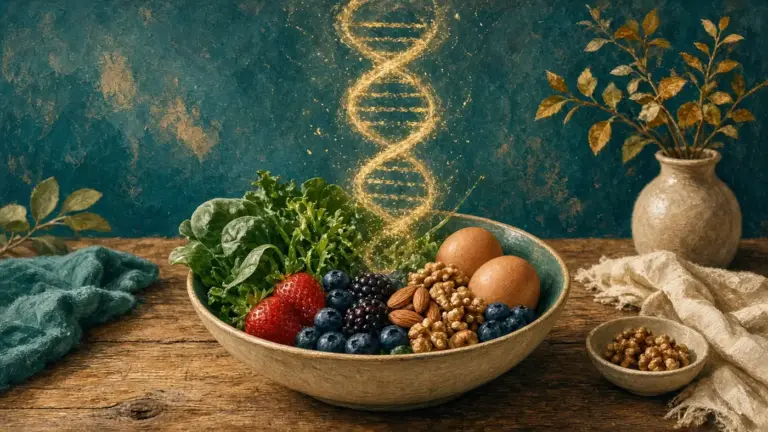


“I know I should eat better. I just don’t see what that has to do with how I feel.”
I hear some version of this often. When we’re anxious, low, or worn out, food can feel like the last thing that matters. But your brain is an organ, and like every organ, it is built and fueled by what you give it. With the holidays just around the corner, I want to share some hope about how everyday food choices can become part of caring for your mind.
Your Brain Runs on What You Feed It
Your brain is only a small part of your body’s weight, yet it uses a large share of your energy, day and night. The vitamins, minerals, healthy fats, and amino acids in your food become the building blocks for the chemical messengers your brain uses to manage mood, focus, and sleep.
Harvard Health puts it this way: like an expensive car, your brain does best on premium fuel. Foods packed with vitamins, minerals, and antioxidants help nourish and protect it. Diets high in refined sugars, on the other hand, promote inflammation, and studies have linked them with worse mood symptoms, including depression.
The Gut-Brain Connection
One of the most hopeful discoveries of recent years is how closely the gut and the brain talk to each other. Serotonin, a chemical messenger that helps regulate sleep, appetite, and mood, is made mostly in the digestive tract, and Harvard Health estimates that about 95% of it is produced there. Researchers at Caltech found that the healthy bacteria living in our gut play an important part in that process.
In plain language: caring for your gut is one way of caring for your brain. Fiber, vegetables, beans, and fermented foods like plain yogurt, kefir, and sauerkraut help feed those helpful bacteria.
What the Research Shows
In 2017, Australian researchers led by Professor Felice Jacka published the SMILES trial, one of the first randomized studies to test whether improving diet could help adults with major depression. Over 12 weeks, people who worked with a dietitian toward a Mediterranean-style eating pattern improved more than those who received social support alone. About one in three in the diet group reached remission, compared with fewer than one in ten in the comparison group. It was a small study, and many participants continued their usual treatment, but it was an important step.
A larger 2018 review in Molecular Psychiatry pulled together dozens of observational studies and found that people who ate a more Mediterranean-style diet had a lower risk of depression over time. Research like this doesn’t prove that food alone causes or cures anything, but it adds up to a clear message: what we eat is part of the picture.
Your Body Is a Gift to Care For
Scripture reminds us, “Do you not know that your bodies are temples of the Holy Spirit, who is in you, whom you have received from God? You are not your own; you were bought at a price. Therefore honor God with your bodies” (1 Corinthians 6:19-20). I don’t read that as a call to guilt or perfection. I read it as an invitation. Caring for your body, including your brain, is one way to honor the life you’ve been given.
Simple Places to Start This Week
You don’t need a complete overhaul. Small, steady changes are easier to keep, especially during a busy season:
- Add before you subtract. Put one extra vegetable or a handful of berries on your plate each day.
- Include protein and healthy fats at breakfast, like eggs, nuts, or plain Greek yogurt, to help keep your energy and mood steadier through the morning.
- Feed your gut. Try a serving of a fermented food a few times a week, and add beans, lentils, or whole grains for fiber.
- Enjoy fish such as salmon or sardines once or twice a week for omega-3 fats.
- Notice your sugar and caffeine. Pay attention to how you feel an hour or two after a sweet snack or your third cup of coffee.
- Drink water. Even mild dehydration can leave you tired and foggy.
- Enjoy the holiday table without shame. One meal doesn’t undo anything. Get back to your simple habits the next day.
A Gentle Word of Caution
Food is a powerful support, but it is not a replacement for care. Please don’t stop or change any medication on your own, and talk with your physician or a qualified health professional before making big changes to your diet or starting supplements, especially if you have a medical condition, are pregnant, or have a history of disordered eating. If your relationship with food itself feels like a struggle, that is a very good reason to reach out for support.
Taking the Next Step
This article is for general education and encouragement. It is not a substitute for individual counseling or medical care. If something here stirred something in you, I gently encourage you to reach out to a licensed professional who can walk alongside you.
At Unity Health Solutions, I care for the whole person: mind, body, relationships, and faith. If you would like to work with me, please start with the New Patient Assessment Form. Once it is received, we will reach out to schedule your first visit. I see clients in my Midland office and by video for clients in Texas.
With hope,
Bobbi
Sources
- Selhub, Eva, MD. “Nutritional psychiatry: Your brain on food.” Harvard Health Blog, Harvard Medical School (updated Sept. 18, 2022). Harvard Health: Nutritional psychiatry
- Yano, J. M., et al. “Indigenous Bacteria from the Gut Microbiota Regulate Host Serotonin Biosynthesis.” Cell 161, no. 2 (2015): 264-276. Cell: Gut Microbiota Regulate Host Serotonin Biosynthesis
- Jacka, F. N., et al. “A randomised controlled trial of dietary improvement for adults with major depression (the ‘SMILES’ trial).” BMC Medicine 15 (2017): 23. BMC Medicine: The SMILES trial
- Lassale, C., et al. “Healthy dietary indices and risk of depressive outcomes: a systematic review and meta-analysis of observational studies.” Molecular Psychiatry 24 (2019): 965-986. Molecular Psychiatry: Healthy dietary indices and risk of depressive outcomes
- The Holy Bible, New International Version (NIV): 1 Corinthians 6:19-20. BibleGateway: 1 Corinthians 6:19-20 (NIV)
Ready to take the next step?
If this article speaks to where you are, I would love to help. Start with the New Patient Assessment and we will schedule your first visit.